

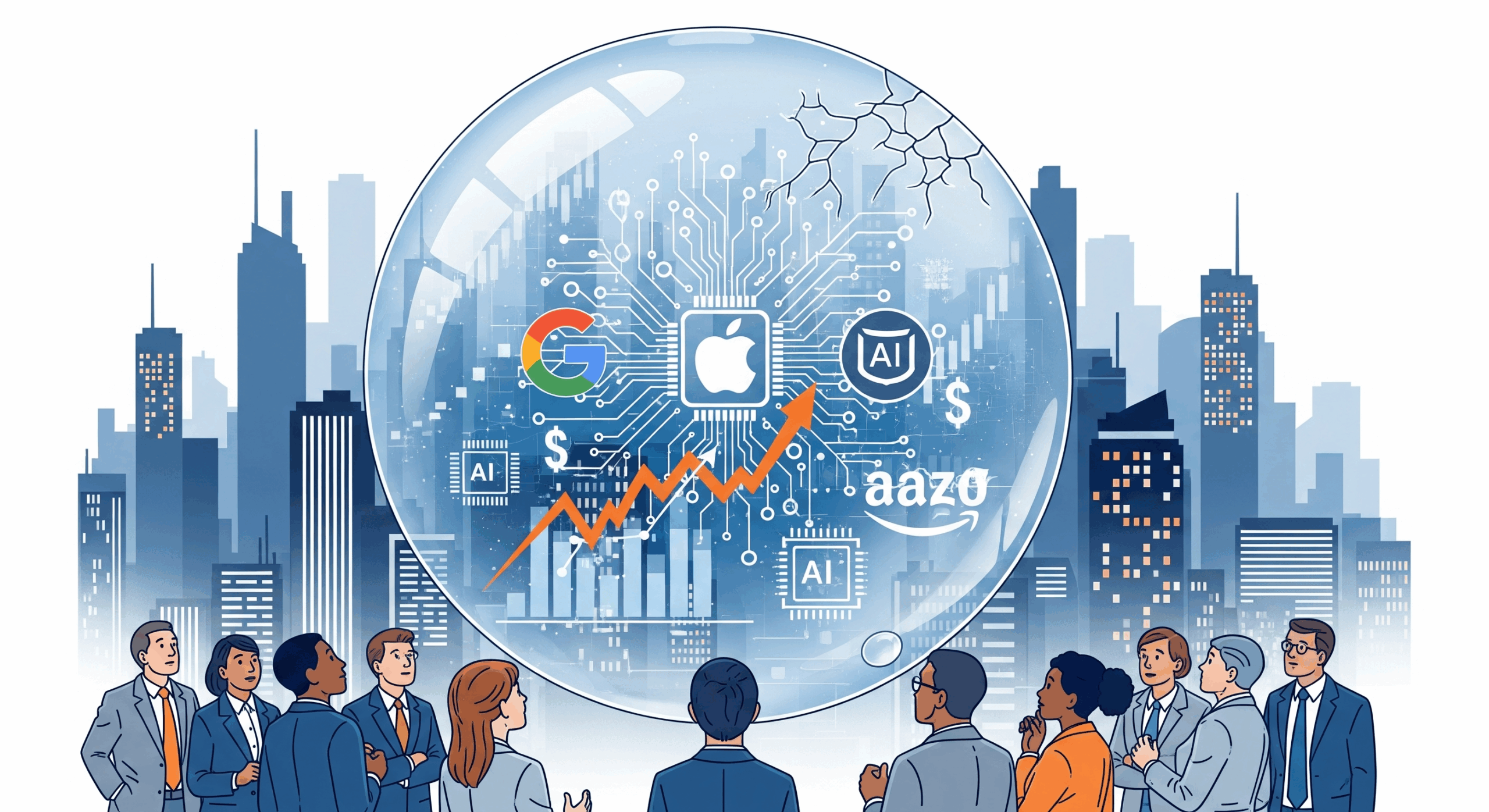
The artificial intelligence landscape—marked by breakneck growth and sky-high valuations—has just received a jolt of realism. In a widely covered interview, OpenAI CEO Sam Altman, a central architect of today’s AI revolution, issued a stark warning: the AI market is in a speculative bubble, and “someone’s gonna get burned.”
His words sent ripples through Silicon Valley and Wall Street, forcing hard questions about whether the current “AI gold rush” is laying the foundation for our future or echoing the speculative fervor of the dot-com bubble, poised for a painful correction.
The Heart of the Warning: “Smart People Get Overexcited”
In public statements this week, Altman said that like the internet in the late ’90s, a “kernel of truth” about AI’s transformative potential may be getting overwhelmed by irrational exuberance.
“Are we in a phase where investors as a whole are overexcited about AI? My opinion is yes. Is AI the most important thing to happen in a very long time? My opinion is also yes,” Altman explained.
His concerns focus on two fronts:
- Unsustainable Valuations: Startups often reach multi-billion-dollar valuations with little more than a clever wrapper atop existing foundational models, lacking clear paths to profitability.
- Immense Costs: The cost of training and running advanced AI models is astronomical, creating situations where serving a single response may cost more than the revenue it generates.
Altman’s caution isn’t cynicism—he remains bullish on AI’s lasting impact—but a call to ground expectations in business reality.
Signs the Bubble Is Real
Multiple warning signs, corroborated across the industry, suggest a speculative bubble may indeed be inflating:
1. Explosive Market Growth and Lofty Forecasts
Estimates for the global AI market in 2024 range between $279 billion and $638 billion, with projections soaring to as high as $1.8 trillion by 2030 and up to $3.7 trillion by 2034, depending on the methodology—a compound annual growth rate (CAGR) between 19% and 36%.
2. The “GPU Gold Rush”
AI’s hunger for high-performance computing has created an insatiable demand for GPUs, especially from Nvidia, which now owns nearly 70-95% of the AI chip market. Companies are pouring billions into hardware for models that may never achieve profitability—a modern echo of the data-center buildouts of the dot-com era.
3. Profitless Prosperity
Reports reveal even AI leaders such as OpenAI are growing rapidly while operating at significant losses. OpenAI, for example, hit a $13B run-rate by July 2025 but is forecast to burn $8B in cash this year, expecting real profitability only by 2029.
4. “AI Washing”
Just as companies once tacked “.com” onto their names to skyrocket stock prices, today’s businesses are rebranding with “AI” to attract capital, often without substantial technological innovation.
5. Astronomical Valuations and Talent Wars
Median revenue multiples for AI companies hover close to 26x, and sky-high salaries for skilled AI professionals further inflate costs. Major funding rounds—such as OpenAI’s $40B, Scale AI’s $14.3B, and xAI’s $10B—underscore the sector’s froth.
But Is It Different This Time?
Compelling counterarguments suggest that, while bubbly, this boom may rest on firmer ground:
Tangible, Transformative Utility
Unlike their late-90s dot-com counterparts, today’s AI tools really work. Generative models streamline workflows, create value across industries, and save knowledge workers as much as 25% of their time daily.
A True Technological Platform Shift
AI is not merely another product category but a new layer in the economy’s infrastructure—comparable to the internet, mobile computing, or electricity. Such shifts are volatile but create trillions in lasting value.
The Backing of Tech’s Deepest Pockets
This time, the main players aren’t undercapitalized startups but the world’s most profitable corporations—Microsoft, Google, Amazon, and Apple—able to weather losses as they invest tens of billions in R&D.
Lessons from History, Glimpses of the Future
The dot-com crash of the early 2000s wiped out thousands of companies and trillions in market value, but the internet ultimately emerged stronger and more foundational. Historical analysis suggests that a potential AI correction could:
- Purge “wrapper” startups and those without defensible moats
- Consolidate power among foundational model providers and well-capitalized tech giants
- Refocus the industry on tangible profitability and business value
What Might Come Next?
Going further, today’s landscape presents unique signals and risks:
- The emergence of leaner, cheaper foundation models may reduce infrastructure barriers—undercutting the rationale for massive, speculative spending
- Governments are moving toward tightening AI regulation, which could alter the investment climate almost overnight
- On the ground, enterprise adoption may not be matching up with the skyrocketing market forecasts
The Bottom Line
Sam Altman’s warning is not a death knell for AI, but a call for business sobriety. The real challenge: look beyond dazzling demos and soaring valuations to focus on delivering profitability and sustainable impact.
Whether this moment is a bubble about to burst or simply another volatile phase in a world-changing tech shift, the journey ahead will almost certainly be stormy. For investors, founders, and society, the task now is to build enduring value—and ensure that when the froth subsides, we’re left with technology that truly reshapes our world for the better.
Key Sources and References
- Sam Altman’s AI Bubble Comments: Invezz, The Register, Futurism
- AI Market Sizing: Grand View Research, Precedence Research
- OpenAI Financials: Sacra, Quartz
- Industry Analysis: IE Insights, Voyant Health
- Market Data: Visual Capitalist, Aventis Advisors, Exploding Topics