

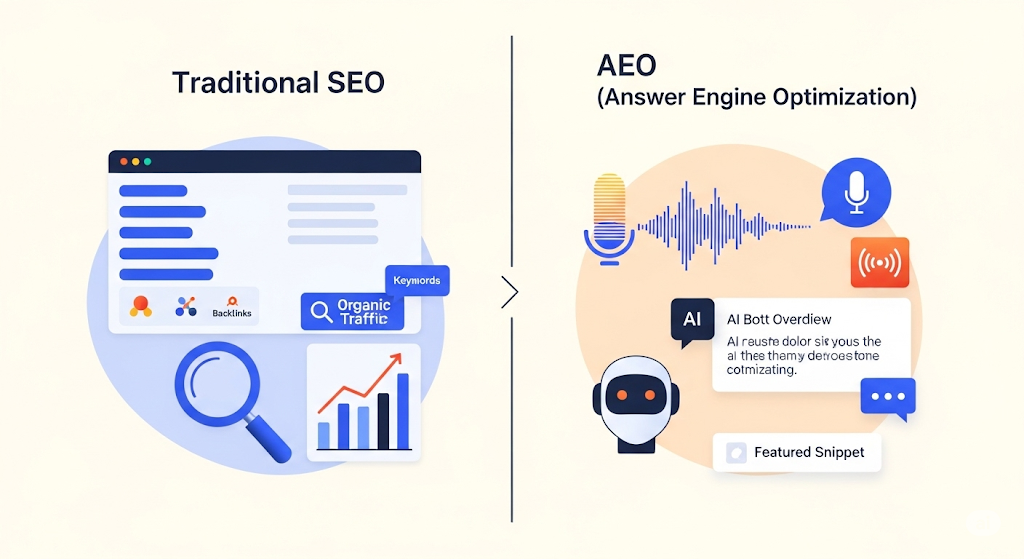
The assertion that “SEO is dead” has circulated for years, a persistent echo in the digital marketing landscape. While it has historically been an exaggeration, the transformations witnessed in 2025 signal a profound shift that renders a singular, traditional SEO approach insufficient for sustained online visibility. This is not a demise of SEO but rather a fundamental evolution of the discipline itself. The challenge facing businesses today is not whether to abandon SEO, but how to adapt and integrate new strategies to remain relevant in a world where AI and conversational interfaces are reshaping how users find information.
The modern search ecosystem is defined by three interconnected pillars, each with a distinct role in a comprehensive digital strategy.
- Traditional Search Engine Optimization (SEO) remains the foundational practice of improving a website’s ranking in traditional search engine results pages (SERPs) by targeting keywords and building link authority. It is the bedrock of discoverability and organic traffic.
- Answer Engine Optimization (AEO) is the emerging practice of structuring content to be selected as the definitive, direct answer in AI-driven search environments. This strategy focuses on securing visibility in zero-click experiences such as featured snippets, AI Overviews, and voice search results.
- Generative Engine Optimization (GEO) represents the most advanced layer of this evolution. It is the strategy of influencing what AI tools like ChatGPT, Claude, and Google’s SGE “think and say” about a brand or topic, aiming to earn brand citations and positive mentions within AI-generated responses.
This report asserts that the core strategic question for 2025 is not a choice between these approaches, but a deliberate effort to integrate them. Relying solely on traditional SEO risks obsolescence, while a myopic focus on AEO or GEO without a strong technical foundation will yield limited results. A hybrid, synergistic model that unifies these three pillars is the only path to a durable and future-proof digital presence. The following analysis will delve into each of these strategies, detailing their respective values and outlining a practical framework for investment in the coming year.
The Foundation: Traditional SEO in 2025
Traditional SEO, far from being obsolete, is the essential groundwork upon which all other modern search strategies are built. In 2025, its principles have not been replaced, but rather refined and amplified by the very forces that seem to threaten it. Traditional SEO continues to be defined by the goal of boosting a website’s online presence and driving organic traffic by leveraging backlinks, technical optimizations, and high-quality content.
The enduring value of these fundamentals is a constant in a rapidly changing environment. Google’s core algorithm updates in June 2025, for example, continue to emphasize core principles such as mobile-first indexing, Core Web Vitals, and the E-E-A-T framework. A fast, mobile-friendly site that loads quickly and offers a seamless user experience is a non-negotiable foundation. This technical health, encompassing crawlability, indexability, and clean site structure, is not merely a ranking factor for traditional search; it is also a fundamental signal of trust for AI-driven crawlers. A technically sound site is more easily parsed by AI, making its content a more reliable source for citation. This connection reveals that technical SEO is not just a legacy practice; it is the fundamental “language” that allows AI systems to understand and trust a website’s content.
Similarly, the quality of content is more critical than ever. The E-E-A-T framework—emphasizing Experience, Expertise, Authoritativeness, and Trustworthiness—remains a cornerstone of Google’s algorithm and a critical signal for all AI platforms. Content that demonstrates real-world experience, provides verifiable credentials, and cites trustworthy sources will be rewarded with higher rankings and a greater likelihood of being featured in AI summaries. This stands in stark contrast to old SEO practices that focused on keyword stuffing and thin, low-quality content, which are now actively penalized. For more insights into Google’s approach to helpful content, refer to Google Search Central’s guidelines on Creating Helpful, Reliable, People-First Content.
The advantages of a strong traditional SEO strategy are well-documented. SEO provides unlimited promotions by increasing a website’s visibility in search results, which, in turn, boosts brand credibility. As an investment, it is highly cost-effective and generates a continuous stream of organic traffic with a high return on investment (ROI). However, these benefits are not without their drawbacks. SEO is a long-term strategy, with significant results often taking months or even years to materialize, making it a challenging approach for start-ups seeking instant visibility. Furthermore, the constant evolution of search algorithms requires continuous effort, monitoring, and adjustment to maintain rankings.
The New Frontier: Answer Engine Optimization (AEO)
The rise of AI-driven search has given birth to a new strategic imperative: Answer Engine Optimization (AEO). AEO is the practice of optimizing content to be selected as the definitive, direct answer in AI-driven search results, such as Google’s AI Overviews, voice assistants like Siri, and chatbots like ChatGPT. The primary goal of AEO is a fundamental shift from ranking web pages to providing a concise, accurate, and structured answer that satisfies user intent immediately.
The defining characteristic of this new era is the “zero-click search” phenomenon, where a user’s query is answered directly on the SERP without the need to click a link. Google’s Search Generative Experience (SGE) and its AI Overviews are a prime example of this trend, delivering a detailed, AI-driven summary at the top of the page that pulls from authoritative sources. Data from a BrightEdge study indicates that this shift is not a minor trend; an estimated 84% of queries on Google Search will be impacted by generative AI, with a potential organic traffic decline ranging from 18 to 64% depending on the industry, as reported by BrightEdge’s press releases. This transformation in user behavior, from a “search and click” mindset to an “ask and receive” model, makes AEO a critical component of any modern digital strategy.
The success of AEO is driven by a new set of tactics, many of which build on traditional SEO but with a different emphasis.
- Structured Data and Schema Markup are arguably the most powerful tools in the AEO arsenal. Schema markup, particularly for types like FAQPage, HowTo, and Product, provides a direct signal to AI systems, giving them the context needed to extract key information and display it in rich snippets and AI Overviews. Learn more about marking up FAQs with structured data from Google Search Central’s documentation.
- Conversational Content and Natural Language are prioritized over keyword density. Content for AEO must be written in a conversational, human-like tone, using natural language that mirrors how people ask questions. The focus is on providing a clear, direct answer in the opening sentences of a paragraph, followed by more detailed information.
- Structured Formatting plays a crucial role. AI systems prefer content that is easy to parse and synthesize. This means utilizing bullet points, numbered lists, and tables to organize information, which makes a page a strong candidate for a featured snippet.
AEO offers significant advantages, including increased online visibility even in zero-click environments, a competitive edge over businesses still relying on legacy SEO, and enhanced brand trust by positioning a company as a definitive source of information. However, it also presents challenges. The zero-click nature of AEO makes it difficult to measure with traditional metrics like organic traffic and click-through rate, forcing marketers to track new indicators like citation frequency and brand mentions. This shift in measurement highlights a key transition in the definition of “success”—from clicks and conversions to brand lift and influence.
AEO vs. SEO: A Side-by-Side Analysis
The central question of this report—”Where should you invest?”—requires a clear understanding of the distinctions between AEO and traditional SEO. The following table provides a side-by-side comparison, designed to clarify the nuances of each strategy.
|
Aspect |
Traditional Search Engine Optimization (SEO) |
Answer Engine Optimization (AEO) |
|---|---|---|
|
Primary Goal |
To improve a page’s ranking in a list of search results. |
To be selected as the direct answer or citation in AI-generated results. |
|
Content Focus |
Long-form, comprehensive guides with strategic keyword density. |
Concise, question-based content formatted for quick, direct answers. |
|
Success Metrics |
Organic traffic, click-through rate (CTR), keyword rankings. |
Visibility in AI Overviews, citation frequency, voice search performance. |
|
User Journey |
A user discovers, clicks, and navigates a website for information. |
A user asks a question and receives an immediate, zero-click answer. |
|
Key Tactics |
Backlinks, meta tags, on-page optimization, content depth. |
Schema markup, conversational language, FAQ-driven content, lists, tables. |
|
Platforms |
Google, Bing (traditional SERPs). |
Google SGE, ChatGPT, Perplexity, voice assistants like Siri and Alexa. |
The most significant distinction is the primary goal. While traditional SEO aims to drive traffic through a click, AEO prioritizes delivering an instant answer, even if it means a user never visits the website. This shift necessitates a new approach to content and measurement. Traditional SEO, with its focus on long-form content and keyword density, is designed to encourage users to explore a website. AEO, in contrast, favors concise, conversational, and highly structured content that an AI can easily parse and present to a user. While the metrics for traditional SEO are well-established (e.g., traffic, rankings), AEO demands a new measurement framework focused on visibility and brand mentions.
Despite these differences, the analysis reveals not a competition, but a strong complementarity. The strategies are not mutually exclusive; rather, they are two sides of the same coin, each essential for a complete digital marketing presence in 2025.
The Strategic Imperative: Why a Hybrid Approach is Your Only Option
The central conclusion of this analysis is that a single-minded focus on either traditional SEO or AEO is a flawed strategy. The question “AEO vs. SEO” presents a false dichotomy, as success in the modern search landscape hinges on a strategic blend of both. A strong SEO foundation is the prerequisite for AEO and GEO success. As one analysis notes, a page that does not rank well in traditional search results is far less likely to be included as a source in an AI-generated answer.
This blended approach is further enhanced by incorporating Generative Engine Optimization (GEO). GEO is the strategy of influencing how AI platforms generate responses by ensuring a brand is recognized and cited as an authoritative source. While SEO focuses on ranking and AEO on providing an answer, GEO is about building a broader brand influence that shapes what AI systems “think and say” when asked about a topic. This signals a move from a purely technical link-building strategy to a holistic “Search Everywhere” approach that builds a consistent presence across all digital platforms.
A critical element of this hybrid strategy is a deeper understanding of brand authority. In the age of AI, authority is no longer solely measured by backlinks. AI systems pay attention to every mention of a brand across the web, including social media, forums, and listicles, even when those mentions do not include a direct link. This ubiquity and consistency in brand mentions are powerful signals of trustworthiness and credibility that AI systems use to determine which sources to cite. Consequently, brand building is now a foundational SEO strategy, requiring close collaboration between SEO, PR, and brand marketing teams to ensure a consistent and authoritative presence.
Furthermore, a successful content strategy for 2025 must be multi-modal and segmented. User behavior is diversifying across platforms, with people turning to short-form video on TikTok for quick tutorials, traditional search for general information, and AI for complex questions. This means a single, long-form article is no longer sufficient. A single core idea should be repurposed and optimized for different formats: a long-form article for traditional rankings, a concise FAQ section for AEO, and a short, punchy video for social search platforms. This approach ensures maximum reach and visibility wherever the audience is searching, adapting to different content consumption habits.
The implementation of a hybrid strategy can be broken down into three logical phases:
Phase 1: Fix the Foundation (SEO)
The first step is to conduct a full technical audit to ensure the website is fast, mobile-friendly, and easily crawlable. Existing content should be refreshed to align with E-E-A-T principles, and author bios and citations should be added to build credibility. This critical phase clears the path for all subsequent optimizations.
Phase 2: Target Quick Visibility (AEO)
Once the technical foundation is solid, the focus shifts to quick-win opportunities. This involves researching the exact questions the target audience is asking and restructuring high-priority content to provide direct, concise answers at the top of the page. Implementing schema markup on these pages is a direct signal to AI systems that the content is a structured answer.
Phase 3: Build Long-Term Authority (GEO)
This phase focuses on becoming the definitive, trusted source in the industry. This is achieved by investing in original research and proprietary data, publishing expert commentary, and actively building a citation profile across the web. The goal is to become the source that AI models consistently turn to when assembling answers, cementing a brand’s authority for the long term.
Where to Invest: A Practical Guide for Your 2025 Budget
In 2025, with the average marketing budget on the rise to 9.5% of total business revenue, there is a clear opportunity to make strategic investments in a hybrid search strategy. The modern SEO professional is no longer a technician but an “Influence Engineer,” requiring a diverse skill set that includes data analysis, content design, and technical proficiency to navigate this new landscape. The right tools are also essential, with AI-powered platforms acting as an “SEO cheat code” to automate repetitive tasks and free up time for strategic decision-making.
The allocation of these resources should not be a one-size-fits-all approach. The following table provides a tiered framework for businesses of varying sizes and maturity, offering a clear guide on where to focus investment efforts in 2025.
|
Business Tier |
Primary Focus |
Key Investment Areas |
Success Metrics |
|---|---|---|---|
|
Beginner/Small Business |
Establish foundational visibility and local presence. |
Traditional SEO basics: a quality, functional website, a verified Google Business Profile, and basic keyword research. Low-hanging AEO fruit: create a high-quality FAQ page with proper schema markup. Tools: Use free tools like Google Search Console and a basic SEO plugin for WordPress. |
Local leads, store visits, organic traffic to key service pages. |
|
Established/Mid-Market |
Blend SEO and AEO to capture both clicks and instant answers. |
Content Hubs: create comprehensive content hubs and repurpose core content into multiple formats (e.g., long-form guides, short videos, infographics). Advanced AEO: restructure existing content to provide direct, concise answers at the top of pages and optimize for voice search. Tools: invest in an all-in-one platform like Semrush or Ahrefs to track a broader range of metrics beyond traffic. |
Featured snippet acquisition rates, branded search volume growth, organic traffic to high-converting pages. |
|
Enterprise |
Dominate the industry as a definitive, trusted source for both humans and AI. |
Proprietary Data and Research: invest in original research and data to become a unique, authoritative source that AI models cite. Omni-Channel Optimization: implement a “Search Everywhere” strategy, managing brand mentions and citations across search, social, and LLMs. Advanced Technical SEO: ensure the highest level of technical polish, including AI crawler management and comprehensive schema implementation. |
Citation frequency in AI overviews, brand sentiment, share of voice vs. competitors in key topics. |
This tiered approach provides a clear roadmap for businesses, ensuring that investments are aligned with their strategic goals and available resources. Small businesses can start by focusing on the fundamentals and low-cost AEO tactics, while larger enterprises can leverage their resources to create proprietary content and dominate the AI-driven search landscape as the definitive authority.
Actionable Steps for Implementation
The shift to a hybrid search strategy requires a practical, step-by-step approach. The following actions can be taken immediately to begin the transition.
- Conduct an AEO Audit: Analyze existing content to identify opportunities for AEO. This involves finding pages that currently rank well or have the potential to answer a common question concisely.
- Restructure Your Content: For high-priority pages, front-load the content with a direct, 40-60 word answer to a key question, followed by a detailed, in-depth explanation. Utilize lists, bullet points, and tables to make the content easily scannable and digestible for AI systems.
- Implement Schema Markup: Use a tool or a plugin to add FAQPage, HowTo, and other relevant structured data to your content. This is a direct signal to AI systems that the content is a structured answer and increases the chances of being featured in rich snippets. For deeper understanding, explore Backlinko’s guide on Schema Markup.
- Broaden Your Keyword Research: Move beyond traditional keyword metrics. Use tools like AnswerThePublic or analyze Google’s “People Also Ask” section to uncover conversational, long-tail queries and the specific pain points your audience is trying to solve.
- Optimize for Brand Mentions: Actively build a citation profile by seeking out mentions in listicles and industry publications, even without a direct link. AI systems pay attention to these co-citations as a signal of authority. Monitor these mentions with AI tools to track brand sentiment and visibility.
- Leverage AI Tools: Use AI assistants for tasks such as brainstorming, creating content outlines, or technical audits. This streamlines your workflow and allows your team to focus on high-level strategy and creative execution. For more, refer to the DMarketer Tayeeb guide on The Ultimate Guide to Answer Engine Optimization in 2025 and Generative Engine Optimization: Mastering AI-Powered Search in 2025.
Conclusion: Your Path to Future-Proof Visibility
The narrative of “AEO vs. SEO” in 2025 is a misconception. The evolution of search means SEO is no longer a singular discipline but a foundational component of a larger, integrated strategy. The choice is not between AEO and traditional SEO, but in how intelligently a business can blend them to build a resilient and enduring online presence.
The businesses that will thrive in 2025 and beyond are those that proactively embrace this hybrid model. By maintaining strong SEO fundamentals, adapting content for AEO, and building brand authority for GEO, marketers can ensure their brand remains visible, relevant, and trusted in the new age of AI-driven search. The path forward is clear: a unified, strategic approach that leverages the best of all three worlds is the only way to secure a brand’s position as a definitive source of information in a landscape increasingly defined by instant answers and generative intelligence.